For decades, the commercial building sector has relied on Building Management Systems (BMS) that are fundamentally fragmented, proprietary, and hardware-dependent. Today, the industry is undergoing a paradigm shift mirroring the transition from the flip phone to the smartphone. By decoupling software from hardware, modern building automation is unlocking unprecedented scalability, interoperability, and energy savings. This paper explores the transition from rigid legacy hardware to dynamic software environments, demonstrating how enterprise real estate can immediately capitalize on this technological leap.
To understand the magnitude of today’s building automation revolution, we must first look at the restrictive environment that has governed facilities for the last thirty years.
Legacy BMS architectures operate in structural silos. The HVAC system, lighting controls, and access control systems often run on different vendor-locked protocols, managed on separate, localized on-premise servers. Facility managers are forced to interact with multiple disconnected interfaces just to keep a building comfortable, leading to operational blind spots and rampant energy waste.
Historically, upgrading these legacy environments demanded intensive capital expenditure (CapEx) to physically replace controllers and run entirely new copper wiring. Like a mobile phone manufactured before 2007, the system features you bought on day one were exactly the features you were stuck with on day one thousand. There was no mechanism to deploy dynamic optimizations or accommodate shifting grid standards without an expensive physical overhaul. Buildings were static liabilities, unable to adapt to the changing demands of modern sustainability.

The solution is not to buy a more expensive flip phone; the solution is to adopt the smartphone paradigm. The modern approach shifts the foundational architecture to a centralized, software-defined operating layer.
Just as advanced mobile operating systems allow independent developers to build application ecosystems leveraging a phone’s native hardware components, a unified building data layer permits enterprise software to access, analyze, and orchestrate a property’s existing mechanical infrastructure. This transition is defined by three critical breakthroughs:
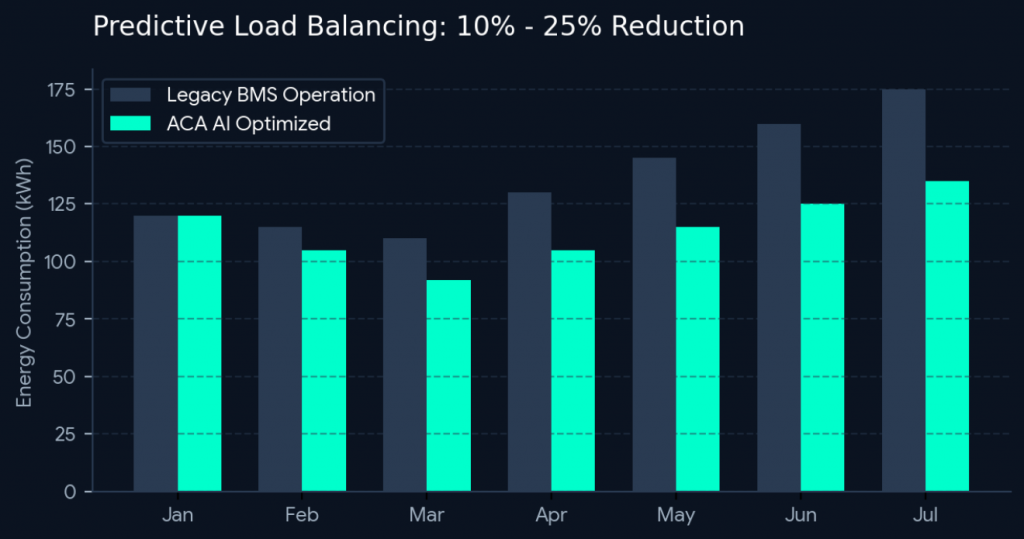
The transition to software-defined building intelligence is no longer a futuristic concept; it is an immediate financial imperative. Commercial portfolios failing to capture this shift face rapid, unrecoverable obsolescence. Conversely, forward-thinking operators leveraging software orchestration achieve immediate returns across three main axes:
At AgileCore, we are the architects of your building’s ‘Smartphone Moment.’ We provide the software intelligence required to bridge the gap between outdated mechanical equipment and the future of automated sustainability. By deploying our advanced AI overlays, commercial property owners can bypass millions in prohibitive CapEx hardware retrofits, unlocking deep energy savings and asset value appreciation solely through the power of smarter software.
Contact us at sales@agilecore.hk for more information.